Finalists
Quantum Talents Symposium Munich
Finalists of the 2026 Quantum Talents Symposium
The symposium is designed to bring together outstanding PhD students and early-career postdocs from all over the world to present their groundbreaking research work in the field of quantum science and technology. The symposium is also committed to increasing diversity in the field of quantum science, fostering a more inclusive and equitable environment that values the contributions of researchers from all backgrounds.
Meet the 2026 Quantum Talents Symposium finalists!
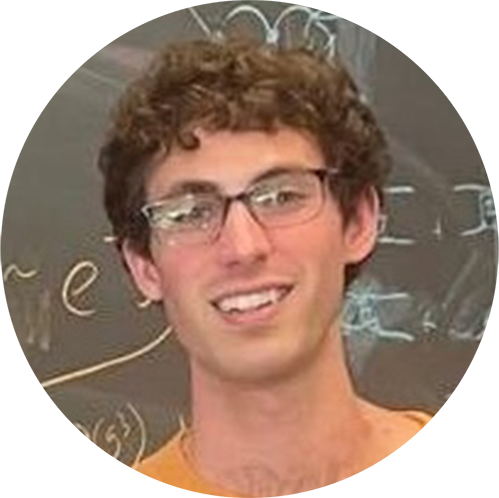
Roland Farrell
Postdoctoral researcher at Caltech Institute of Technology
From long-range entanglement to particle collisions
Abstract
High-energy particle collisions probe the out-of-equilibrium dynamics of interacting quantum fields. Simulating these processes on a quantum computer requires preparing wavepackets that extend over many qubits. In this talk, I will introduce a strategy that separates the wavepacket’s long-range entanglement from the local structure of the interacting particle. A generalized W state supplies the long-range entanglement, providing a universal resource for a broad class of excitations. Mid-circuit measurements and feedforward allow this resource to be prepared in constant quantum circuit depth, independent of wavepacket size. An energy minimizing circuit then builds the particle’s remaining local structure. I will present results that use W-state-based preparation to simulate particle collisions in one-dimensional Ising field theory on 104 qubits of an IBM quantum processor. At sufficiently high center-of-mass energies, these simulations provide the first observation of inelastic particle production in a digital quantum simulation of scattering.
Bio
Roland grew up in the Pacific Northwest where he developed a love for hiking, skiing and fresh strawberries. A fun fact is that he was featured in the Seattle newspaper for climbing on a giant concrete climbing wall.
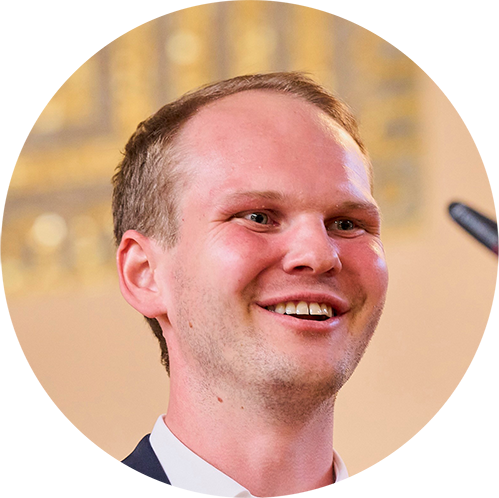
Lukas Homeier
Postdoctoral researcher at JILA, University of Colorado Boulder
Realizing and probing strongly correlated quantum matter
Abstract
Strong interactions can cause particles to organize collectively, giving rise to macroscopic quantum phenomena. The programmability of quantum simulators has provided remarkable microscopic insights into mechanisms underlying such behavior in simplified systems. Realizing more realistic models of correlated materials and probing their many-body structure, however, remain a central challenge. In my talk, I will present a scheme for realizing multi-orbital electron models with ultracold atoms, akin to the orbital structure of high-Tc cuprate superconductors. I will show that current quantum simulation technology can access correlated states involving multiple orbitals, opening a route to investigate the role of orbital physics in superconductivity. In the second part, I will show how multiple quantum coherences, a technique established in nuclear magnetic resonance, can serve as a phase-sensitive probe of quantum spin liquids. As a diagnostic of collective coherence and entanglement, they can be directly related to non-local anyon condensation and reveal characteristic signatures across the phase transitions. I will conclude with a forward-looking perspective on how programmable quantum simulators can be used not only to realize complex quantum matter, but also to uncover the defining many-body correlations.
Bio
Lukas is a Simons Postdoctoral Fellow at JILA in Boulder, working on the theory of quantum many-body systems. He is fascinated by the collective phenomena that emerge when many particles interact and studies how to reveal them in quantum simulators. Fun fact: the Boulder lifestyle (running, climbing, ..) has become his favorite emergent phenomenon.
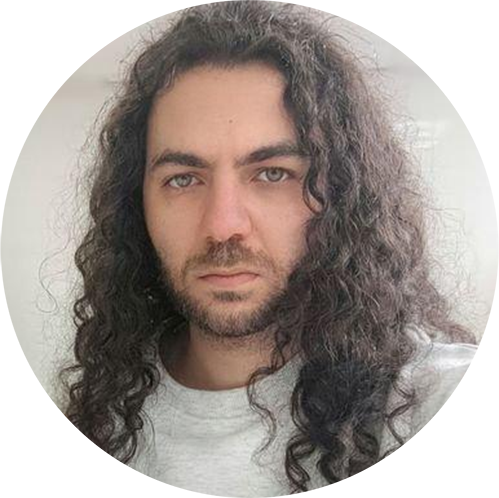
Yusuf Karli
Postdoctoral researcher at University of CambridgeCoherent Quantum-Dot Interfaces for Photonic Entanglement and Quantum Networks
Abstract
Semiconductor quantum dots are promising building blocks for quantum networks, offering bright, on-demand emission of single photons and entangled photon pairs together with strong light–matter coupling. However, generating high-quality quantum light is only the first step. Distributing entanglement across multiple network segments also requires an efficient spin–photon interface and a memory capable of preserving coherence while remote entanglement is being established. Moreover, conventional strictly resonant excitation requires stringent suppression of scattered laser light, typically through polarization filtering, limiting photon collection and experimental flexibility.
In this talk, I begin by presenting the first experimental demonstration of red-detuned coherent excitation of a quantum emitter using the SUPER (Swing-up of Quantum Emitter Population) scheme. SUPER is a coherent population-control method based on a red-detuned multicolor optical field, in contrast to conventional single-field resonant excitation. Using this approach, we demonstrated deterministic single-photon generation without polarization filtering and subsequently extended the method to generate biexciton–exciton cascade photon pairs from quantum dots with small fine-structure splitting, providing a promising route toward entangled-photon-pair generation. Following our initial demonstration, the SUPER scheme has attracted growing interest from research groups worldwide and has become an active direction in quantum-emitter research.
Open, tunable microcavities have achieved end-to-end photon efficiencies above 70% with InGaAs quantum dots, among the highest reported for quantum-dot sources. Here, we present what is, to our knowledge, the first open-cavity interface with GaAs quantum dots. The favorable electron-spin properties of GaAs quantum dots, arising from their nearly strain-free growth by droplet etching, make them particularly promising for quantum-repeater applications. Our preliminary results show clear Purcell enhancement, including shorter radiative lifetimes and increased photon-collection efficiency, important steps toward single-shot spin readout and high-fidelity time-bin entanglement between an electron spin and an emitted photon. The combination of high-quality photons, efficient collection, and coherent spin control is also promising for photonic cluster-state generation.
Finally, I discuss two ongoing research directions: developing cavity-enhanced single-shot spin readout and a longer-lived quantum memory and extending the SUPER scheme to cavity-based spin initialization and readout. Together with background-free single-photon and cascade-pair generation, these capabilities could enable an efficient spin–photon interface with integrated quantum memory, providing a solid-state pathway toward scalable quantum networks.
Bio
Yusuf Karli is a Research Fellow at Emmanuel College, University of Cambridge, where he works on quantum science using semiconductorquantum dots, with research spanning quantum networks, spin-photon entanglement, and many-body physics for quantum registers. He is also the coordinator of QTurkey (Quantum Türkiye), one of Türkiye’s largest non-profit quantum initiatives, with a presence across universities throughout the country and a focus on quantum science, education, and communication. As a fun fact, he helped host the travelling QuanTour quantum light source in Cambridge and later launched a social media campaign challenging the project to add Türkiye as its 13th destination, and it worked! :)
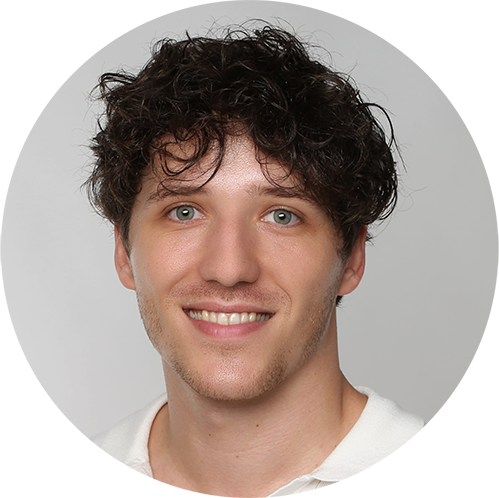
Aron Kerschbaumer
PhD Student at Institute of Science and Technology Austria
New Forms of Weak Ergodicity Breaking
Abstract
Generic quantum many-body systems are expected to thermalize, scrambling local information and coherent dynamics. Yet rare instances of nonthermal dynamics can persist in otherwise chaotic systems - a phenomenon known as weak ergodicity breaking. A paradigmatic example is quantum many-body scarring, in which special initial states exhibit long-lived coherent dynamics in the form of periodic revivals.
I will show that weak ergodicity breaking is considerably richer than previously known and present new forms of scarring that reveal the phenomenon to be more common than previously thought and, more importantly, demonstrate nonthermal dynamics beyond homogeneous revivals. Examples include chirally propagating quasiparticles that coherently transport information and energy, approximate topological edge physics, and other phenomena unexpected at high energy densities. An important mechanism underlying many of these phenomena is the presence of structured subspaces protected by destructive interference.
These results also frame a discussion of how to systematically discover novel nonthermal dynamics, whether weak ergodicity breaking can affect physical properties of the system, such as transport, and how their coherence might be harnessed for applications in quantum technologies.
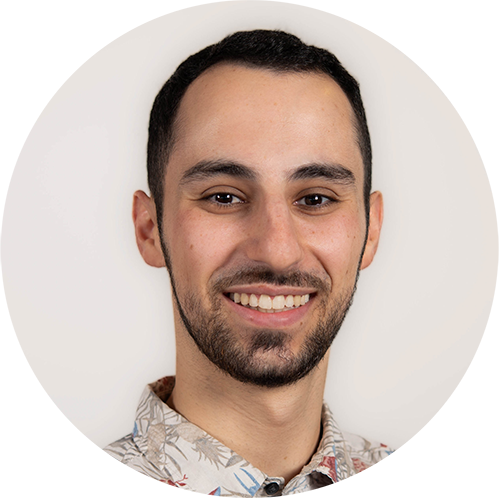
Jonah Peter
Postdoctoral researcher at Harvard University
Chiral Superradiance Enables Quantum-Enhanced Chiral Light-Matter Interactions at Room Temperature
Abstract
The differential interaction of circularly polarized light with chiral matter underpins foundational spectroscopic techniques for characterizing biochemical and condensed matter systems. However, conventional chiral light-matter interactions are intrinsically weak because they rely on interference between electric-dipole and higher-order multipolar transitions. This limitation presents a challenge for high precision measurements and for the development of next-generation chiral quantum devices.
In this talk, I will describe how many-body quantum coherence can dramatically enhance chiral light-matter interactions. I will present the conception, theoretical prediction, and experimental realization of chiral superradiance—a cooperatively enhanced optical phenomenon in which the handedness of a material determines the polarization of its emitted light. We show that chiral superradiance originates from an emergent spin-orbit coupling between photon polarization and propagation direction, giving rise to collective modes with nontrivial topology.1,2 Crucially, the effect arises entirely within the electric-dipole approximation, where light-matter coupling is strong, and is further amplified by many-body coherences. We then experimentally demonstrate chiral superradiance at room temperature and in the solid state, achieving emission anisotropies of up to ~14% in hybrid organic-inorganic halide perovskites.3 Our work is the first to report cooperatively enhanced chiral light-matter interactions in any system and opens new avenues toward room-temperature quantum devices with applications across biology, chemistry, and quantum information science.
[1] J. S. Peter, S. Ostermann, S. F. Yelin, Chirality dependent photon transport and helical superradiance, Phys. Rev. Res. 6 023200 (2024).
[2] J. S. Peter, S. Ostermann, S. F. Yelin, Chirality-induced emergent spin-orbit coupling in topological atomic lattices, Phys. Rev. A 109 043525 (2024).
[3] Q. Wei*, J. S. Peter*, H. Ren*, et al., Chiral superfluorescence from perovskite superlattices at room temperature, Nature 654 369-374 (2026). [*Equal contribution]
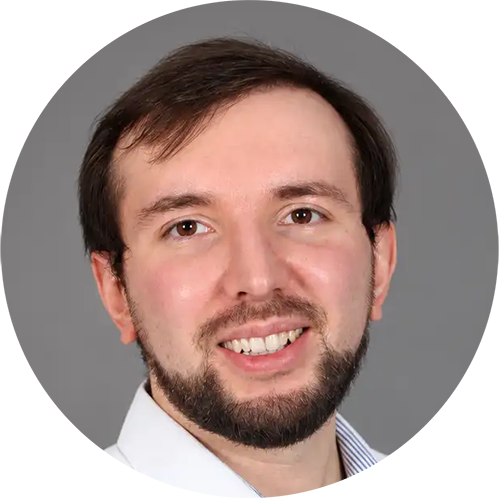
Andrei Rasputnyi
Postdoctoral researcher at MPL Erlangen
Strong-Field Quantum Optics: Driving Non-Perturbative Dynamics with Macroscopic Quantum Light
Abstract
While quantum science and technology has traditionally focused on precisely controlling discrete, fragile states, my research expands this frontier into the highly non-perturbative, sub-cycle regime of strong-field physics. This talk outlines the experimental foundation of an emerging discipline: strong-field quantum optics.
First, I will present the development of a robust platform for generating bright squeezed vacuum (BSV)—a macroscopic state of quantum light characterized by extreme intrinsic intensity fluctuations. I will detail our recent results on the macroscopic phase-space quantum state reconstruction of this ultra-broadband light, establishing a framework for characterizing intensely bright quantum states.
Building upon this, I will demonstrate how the extreme photon-number statistics of BSV can be harnessed to drive strongly non-linear, non-perturbative phenomena, including high-harmonic generation and photoemission from nanostructures. Finally, I will provide a conceptual outlook on the future of this intersection. I will discuss the broader potential of bringing the unprecedented temporal resolution of attosecond physics into the quantum optical landscape, exploring how merging these fields could eventually unlock novel capabilities such as sub-cycle quantum state heralding and quantum petahertz electronics.
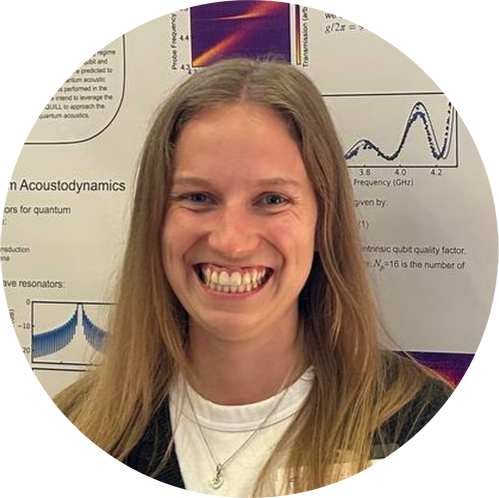
Camryn Undershute
PhD student at Michigan State University
Engineered Decoherence in Hybrid Systems with Superconducting Qubits and Mechanical Resonators
Abstract
The field of circuit quantum acoustodynamics (cQAD) involves microwave frequency mechanical resonators engineered to interact with superconducting qubits. Experiments in this field have made significant progress, demonstrating the viability of cQAD devices for applications in quantum information science. However, as experimental complexity grows, decoherence becomes increasingly challenging to evade, posing a problem for cQAD devices and more generally devices involving superconducting qubits. Here we present recent experimental results from a cQAD system involving a transmon qubit strongly coupled to a surface acoustic wave (SAW) resonator. We rely on the coherent qubit-SAW dynamics to characterize the decoherence of the SAW resonator, and then with the same device we can take advantage of the acoustic losses imparted on the qubit to perform a bath engineering experiment, using coherent drives to stabilize qubit states. Finally, we discuss experimental progress towards probing noise associated with two level system defects, which is a dominant noise source for superconducting qubit systems.
Bio
I am from western Canada and I am currently a PhD student in the Laboratory for Hybrid Quantum Systems at Michigan State University. My research involves superconducting qubits and mechanical resonators, and often focuses on decoherence in these systems. As a fun fact, I was a figure skater.
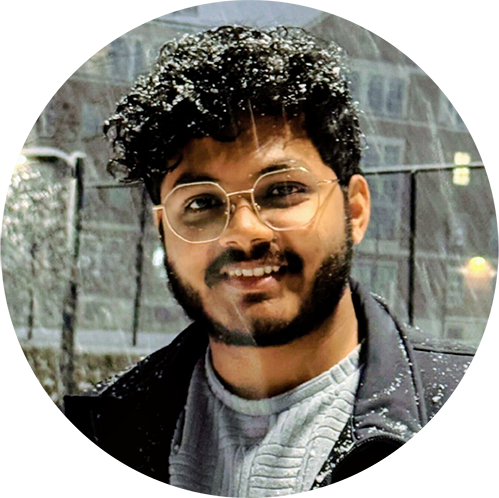
Pranshoo Upadhyay
PhD student at Joint Quantum Institute, University of MarylandFrom witnessing to choreographing excitons in a strongly correlated Bose–Fermi system
Abstract
Two-dimensional moiré heterostructures have revealed a range of exotic correlated phases, including generalized Wigner crystals, orbital ferromagnetism, and the fractional quantum anomalous Hall effect. Far less is known about the interactions in Bose–Fermi mixtures and spinful Bose–Hubbard systems. I use a WSe₂/WS₂ heterobilayer, which hosts a triangular Hubbard lattice, to realize a strongly correlated Bose–Fermi system [1, 2]: interlayer excitons (bosons) coexisting with a correlated electron liquid (fermions), with independent control of the boson and fermion densities.
In the first part, I work with excitons in the extremely dilute limit and control their dynamics through the surrounding electronic order [1]. We observe pronounced modulation of exciton diffusion near the generalized Wigner crystals, and the formation of attractive polarons in the dilute Fermi sea. Near the Mott insulating state, rather than becoming trapped, excitons diffuse a thousandfold faster, revealing their transformation into non-monogamous excitons at the correlated insulator. We then exploit this understanding to achieve spin-selective control of exciton diffusion in an external magnetic field.
In the second part, we study a purely excitonic (bosonic) system at higher density, where strong interactions dominate the dynamics. Our spatiotemporal measurements show that excitons interact strongly and acquire spin-dependent diffusion in the presence of a magnetic field, forming a nonequilibrium state in which opposite-spin excitons spatially separate into exciton spin clusters [3].
Together, these results establish exciton dynamics as a sensitive readout of correlated order and a route to nonequilibrium many-body states. I close with a future direction where we reshape the system in situ, using the correlated electrons as a reconfigurable lattice.
[1] P. Upadhyay et al., Science 391,394-398 (2026).
[2] B. Gao et al., Nat Commun 15, 2305 (2024).
[3] P. Upadhyay et al., manuscript in preparation.
Bio
Pranshoo is a PhD student at the Joint Quantum Institute, UMD where he steers the many-body interactions wihtin quantum matter with light. Away from the lab, he steers the interactions between people with music and dance.
Symposium Jury
Prof. Dr. Frank Pollmann | Technische Universität München
Dr. Petr Zapletal | Friedrich-Alexander-Universität
Prof. Dr. Michael Walter | Ludwig-Maximillians-Universität München
Dr. Nadezhda Kukharchyk | Walter-Meißner-Institut
Dr. Pascal Weckesser | Max Planck Institute of Quantum Optics
Symposium Program
26 October
Day 1
12:30–13:00 | Registration, Meet and Greet Finalists
13:00–13:30 | Welcome talk
13:30–14:30 | Three Minutes of Science, from Munich Community
14:30–15:00 | Coffee Break
15:00–17:00 | Group Labtour in MPQ
27 October
Day 2
09:00–09:30 | Andrei Rasputnyi - Strong-Field Quantum Optics: Driving Non-Perturbative Dynamics with Macroscopic Quantum Light
09:30–10:00 | Aron Kerschbaumer - New Forms of Weak Ergodicity Breaking
10:00–10:30 | Yusuf Karli - Coherent Quantum-Dot Interfaces for Photonic Entanglement and Quantum Networks
10:30–11:00 | Coffee Break
11:00–11:30 | Jonah Peter - Chiral Superradiance Enables Quantum-Enhanced Chiral Light-Matter Interactions at Room Temperature
11:30–12:00 | Roland Farrell - From long-range entanglement to particle collisions
12:00–12:30 | Camryn Undershute - Engineered Decoherence in Hybrid Systems with Superconducting Qubits and Mechanical Resonators
12:30–13:30 | Lunch at MPQ
13:30–14:00 | Lukas Homeier - Realizing and probing strongly correlated quantum matter
14:00–14:30 | Pranshoo Upadhyay - From witnessing to choreographing excitons in a strongly correlated Bose–Fermi system
14:30–15:00 | Coffee Break
15:00–17:30 | Poster Session with Munich community
19:00–21:00 | Closing Dinner for Finalists, Announcement of Prizes (Gasthof Neuwirt, Garching)