MCQST Colloquium: Tobias Osborne
27 August 2026
from 14:00
to 16:00
MCQST Colloquium | Prof.Tobias Osborne (Leibniz Universität Hannover)
Address / Location
MPI of Quantum Optics | Herbert Walther Lecture Hall
Hans-Kopferman-Straße 1
85748
Garching
Show Map
Hide Map
The MCQST Colloquium Series features interdisciplinary talks given by visiting international speakers. The monthly colloquium covers topics spanning all MCQST research units and will be broadcast live via Zoom for audiences worldwide. The main goal of the series is to create the framework for idea exchange, to strengthen links with QST leading groups worldwide, as well as to act as an integral part of the local educational environment.
MCQST Colloquium: Tobias Osborne
We are excited to invite you to the colloquium talk by Tobias Osborne (Leibniz Universität Hannover).
Agenda
14:00 | Colloquium talk by Tobias Osborne on “Large Language Models: A Physicist's Perspective”
15:00 | Coffee break
Large Language Models: A Physicist's Perspective
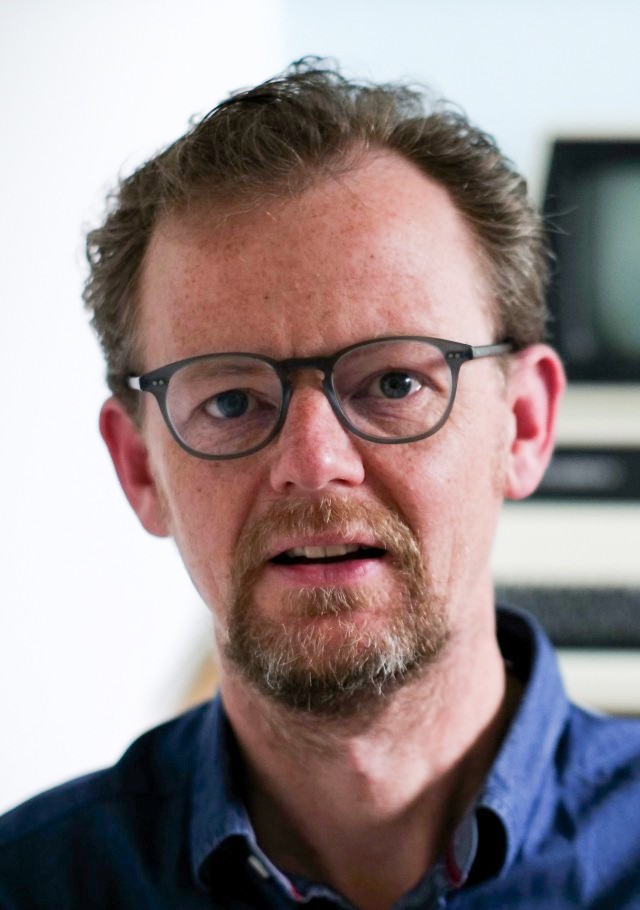
In Q4 2025, LLM-based tools quietly crossed a threshold: with the right workflow, a single researcher can now produce formally verified scientific results at a rate previously requiring a small research group. In this talk I will present a physicist-friendly introduction to large language models. Starting with the transformer as a stateless function whose output is made stochastic by sampling, I will explain how, with the foundation of a raw cURL call to an API, one can strip away the hype and mystery and rebuild the agent stack from first principles: chat as scaffolded API calls, agents as while loops with tool calls, context management as the reason chat interfaces silently ruin your results, bash polling loops as infrastructure, and multi-agent orchestration as the natural endpoint. I will also explain why and how you should be skeptical: getting reliable research output from these tools requires deliberate practice, and an understanding of their limitations. The gap between "I tried ChatGPT and it hallucinated" and "this is a powerful force multiplier and accelerator for research" is not closed by better models. It is closed by technique and domain expertise. I will attempt a little live coding, no promises though!
About Tobias Osborne
Tobias J. Osborne is Professor of Theoretical Physics at the Institute of Theoretical Physics, Leibniz Universität Hannover, and a member of the L3S Research Center. His group works at the interface of quantum information theory, condensed matter physics and quantum field theory, using tools such as tensor network states and entanglement theory; he is a co-discoverer of the quantum Metropolis sampling algorithm and an early contributor to quantum machine learning. His current interests centre on large language models and AI agents as practical tools for theoretical physics research. He is also known for his open-science blog and his freely available lecture courses on quantum field theory and quantum information.
Join in-person or via Zoom
https://lmu-munich.zoom.us/j/69761439704
Meeting ID: 697 6143 9704, Passcode: mcqst2526