The MCQST Colloquium Series features interdisciplinary talks given by visiting international speakers. The monthly colloquium covers topics spanning all MCQST research areas and will be broadcast live via Zoom for audiences worldwide. The main goal of the series is to create the framework for idea exchange, to strengthen links with QST leading groups worldwide, as well as to act as an integral part of the local educational environment.
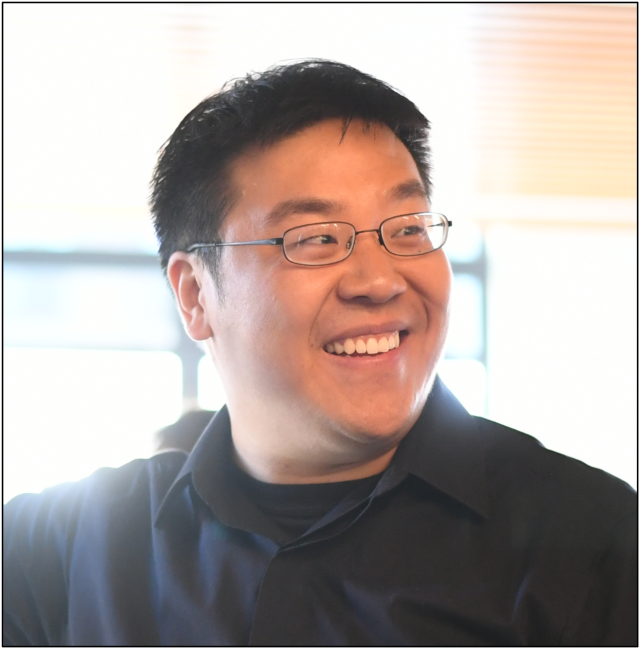
MCQST Colloquium: Norman Y. Yao
We are excited to invite you to the colloquium talk by Norman Y. Yao (Harvard University, USA).
Agenda
15:30 | Teaser talk by Annika Böhler on "Simulating Strongly Correlated Electrons with Neural Quantum States"
15:45 | Coffee break
16:00 | Colloquium talk by Norman Y. Yao on "The anatomy of nickelate superconductivity: A quantum sensor’s view"
The anatomy of nickelate superconductivity: A quantum sensor’s view
Nearly four decades after the discovery of the cuprates, understanding what enables high-temperature superconductivity remains a central challenge in physics. The discovery of superconductivity in bulk nickelates under pressure promises a fresh perspective on this longstanding puzzle. However, the very pressure that enables superconductivity also makes it difficult to probe the material locally, complicating both measurements and the conclusions we can draw from them.
In this colloquium, I will explore these questions using a new experimental toolset: diamond anvil cells equipped with nitrogen-vacancy quantum sensors, which enable the imaging of local magnetic fields and stress under pressure. These measurements reveal a rich spatial landscape of superconductivity within individual crystals. By correlating maps of the Meissner response with spatially resolved X-ray diffraction, we connect superconductivity directly to the underlying crystal structure. I will discuss how these correlations reveal the roles of lattice symmetry, structural disorder, and local stress in promoting—and frustrating—nickelate superconductivity.
About Norman Y. Yao
Norman Yao is a Professor of Physics at Harvard University. His research spans atomic, molecular and optical physics, condensed matter physics, and quantum information science, combining theory and experiment to explore quantum many-body systems and develop new approaches to quantum sensing. He received his undergraduate degree and Ph.D. from Harvard, followed by a Miller Fellowship and a faculty position at UC Berkeley, before returning to Harvard in 2022. His work on non-equilibrium quantum matter, including time crystals, was recognized with a New Horizons in Physics Prize as well as the I. I. Rabi prize from the American Physical Society.