MCQST PhD Awards 2025
6 May 2026
Henning Schlömer and Alexander Ulanowski win the MCQST PhD Awards 2025
The MCQST PhD Award honors the best PhD theses in quantum science and technology selected from the MCQST community. The prize highlights and recognizes excellence in research at an early career stage, and aims to encourage awardees to pursue a future career in science. MCQST considers outstanding theses in the field of quantum science and technology (grade: summa cum laude) from the disciplines of physics, mathematics, computer science, electrical engineering, material science, and chemistry from both, LMU and TUM.
From the submitted theses, the jury selected and awarded two outstanding works in 2025: "Exploring the low-temperature regime of doped Hubbard models – Theoretical insights leveraging quantum simulation" by Henning Schlömer (LMU) and "Cavity-enhanced optical readout and coherent control of the spins of individual erbium dopants”" by Alexander Ulanowski (TUM). Alongside the recognition of their excellent scientific work and contribution to the MCQST scientific community, the awards consist of €2000 each, generously donated by Peak Quantum and Quandela.
The award ceremony took place during a special awards ceremony on 21 April 2026 at the Max Planck Institute of Qauntum Optics. Both awardees attended the ceremony and gave a talk virtually.
Henning Schlömer
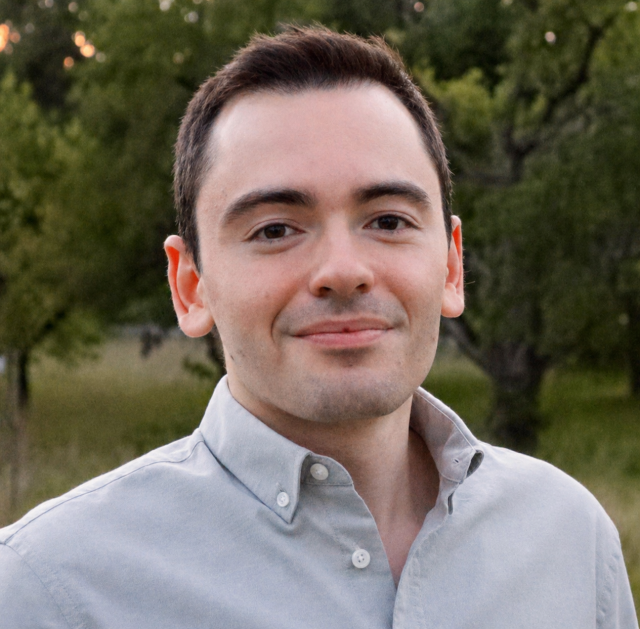
Exploring the low-temperature regime of doped Hubbard models – Theoretical insights leveraging quantum simulation
LMU | Advisor: Fabian Grusdt
The Fermi-Hubbard model is one of the central models for strongly correlated quantum matter and is believed to capture key aspects of high-temperature superconductors. However, its most intriguing low-temperature phases, including stripe order and superconductivity, remain difficult to access with conventional numerical methods and ultracold-atom quantum simulators, as they emerge only at very low energy scales. In my thesis, certain variants of Hubbard models are explored to bring these phases into experimentally accessible regimes. This includes studying mixed-dimensional Hubbard systems which strongly enhance stripe order, and identifying bilayer Hubbard models inspired by nickelate superconductors in which superconducting correlations are strongly enhanced at experimentally realistic temperatures. Together with hybrid analog-digital protocols that transform superconducting pair correlations into directly measurable observables, this provides a concrete route toward realizing and detecting high-temperature superconductivity in strongly interacting fermionic quantum simulators.
"Winning this award is special to me because it comes from a community that strongly shaped my scientific development. MCQST is an exceptional program, and this prize is closely connected for me to my time in Munich, as well as to the collaborations, experiences, and friendships that grew out of the MCQST community."
Henning started a postdoctoral fellowship at ITAMP and Harvard, where he is working toward material-specific theories of unconventional superconductivity and new quantum-simulation algorithms. His current research focuses on pressurized bilayer nickelates and on dissipative state-preparation protocols for strongly interacting fermions.
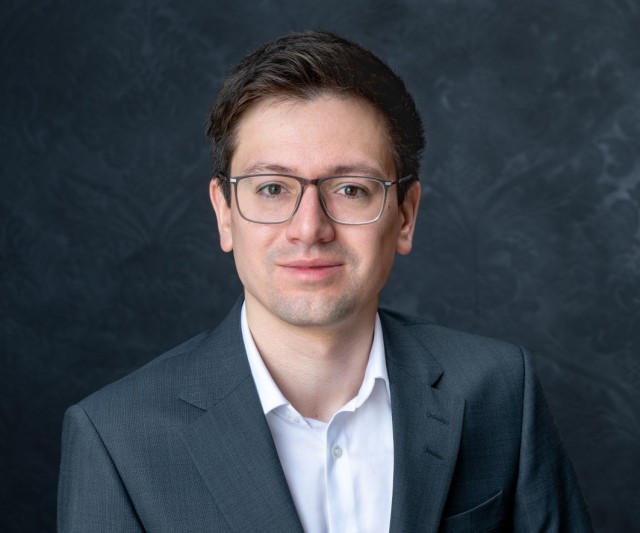
Alexander Ulanowski
Cavity-enhanced optical readout and coherent control of the spins of individual erbium dopants
TUM | Advisor: Andreas Reiserer
Rare-earth ions embedded in solid-state hosts can exhibit exceptionally long optical and spin coherence times, making them a promising platform for quantum information processing. Among these ions, erbium is particularly attractive due to its optical transition in the near-infrared, enabling low-loss photon transmission through conventional optical fibers and thus being well suited for long-distance quantum communication. A central challenge in the distribution of quantum entanglement is the realization of an efficient interface between stationary spin qubits and flying qubits - the photons. In my PhD work, I have investigated such an interface based on a high-finesse Fabry-Perot resonator incorporating a 10-micrometer-thin crystalline membrane doped with erbium ions. This resonator geometry allows for a large separation between the dopants and material interfaces, thereby preserving the optical coherence observed in bulk crystals and approaching the lifetime limit. In one resonator, several hundred dopants can be addressed individually via frequency-multiplexed optical pulses. Through magnetic interactions with surrounding nuclear spins, the erbium dopants can serve as probes of their local atomic environment, providing detailed insight into the host crystal. Furthermore, the narrow optical transitions of erbium dopants in this environment, with spectral diffusion as low as 0.2 MHz, enable all-optical initialization, coherent control, and single-shot readout of both electronic and nuclear spin qubits. Under dynamical decoupling, a technique to mitigate environmental noise, a nuclear spin coherence time exceeding 0.2 seconds is demonstrated - sufficient to preserve the stationary qubit state during photon transmission. Overall, this platform represents a promising approach toward the realization of scalable quantum networks, with potential applications in distributed quantum computing and secure quantum communication.
"Quantum science has many facets, and I truly value how MCQST brings the community together and supports it in diverse ways. This has made my PhD an inspiring and exciting journey, and I feel deeply honored that my research has been selected for this year’s PhD award."
Following the completion of his thesis, Alexander has continued his research on rare-earth-doped material platforms as a PostDoc in Munich, with the aim of bringing fundamental laboratory experiments closer to practical applications.
Congratulations to Henning and Alexander, and all the best for their future!