Seed Funding
Supporting Exceptional and Innovative Ideas
The Seed Funding Program provides MCQST members and postdoctoral researchers with the opportunity to explore new and unconventional research ideas within the MCQST research framework. The program is specifically designed to support high-risk, high-gain projects with the potential for significant scientific impact. In particular, the format is intended to foster new collaborations within the MCQST environment, and/or initiate larger-scale follow-up funding through third-party funds.
Seed Funding is intended exclusively for entirely new projects and does not support the continuation or extension of existing research.
Eligibility & Funding Criteria
Who can apply?
All MCQST members and their postdocs are eligible to apply. Joint applications involving different MCQST groups are also eligible.
- Postdoctoral applicants: A support letter from the supervising PI is required. The support letter must state clearly that the applicant is the initiator of the project and will lead it independently of the PI/host.
- START Fellows and MCQST (Distinguished) Postdocs, including past fellows, are considered eligible PIs/members.
- Only one application per research group is allowed per call, either from a PI or a postdoc.
- PIs and postdocs who were successful in the previous call are not eligible to apply.
Funding criteria
Funding of up to €50,000 is available for a project duration of 6 months.
- The budget plan must be reasonable and well justified. Funds may be used for equipment, consumables, travel expenses, or personnel costs. Postdoctoral researchers cannot use the funds to finance their own positions.
- Projects will be evaluated based on their scientific quality.
- Priority will be given to excellent projects that have high risk/high gain potential and that are interdisciplinary, connect different Research Areas, or involve researchers from different groups.
- Preference will be given to excellent proposals submitted by early-career researchers, women, and members of other underrepresented groups.
- Successful projects are expected to actively pursue follow-up third-party funding.
A one-page report summarizing the project results must be submitted to the MCQST Office no later than three months after the project’s completion.
How to Apply?
Please prepare the documents listed below and complete the application form.
Required documents:
- Research proposal, including a budget plan (max. two pages) - please use this template (LaTeX |Word ).
- For postdocs: Support letter from a PI - please use this template or make sure to cover the contents thereof.
Questions? Contact seed-funding[at]mcqst.de.
Application deadlines: 15 March / 15 September
Projects start on 1 July or 1 January, respectively. Starting on these dates is strongly recommended, as it aligns with the annual DFG budget cycle, and orders can be made before the end of the year to bind funding.
 © Christoph Hohmann (MCQST)
 Seed Funding: A Match Made in Munich
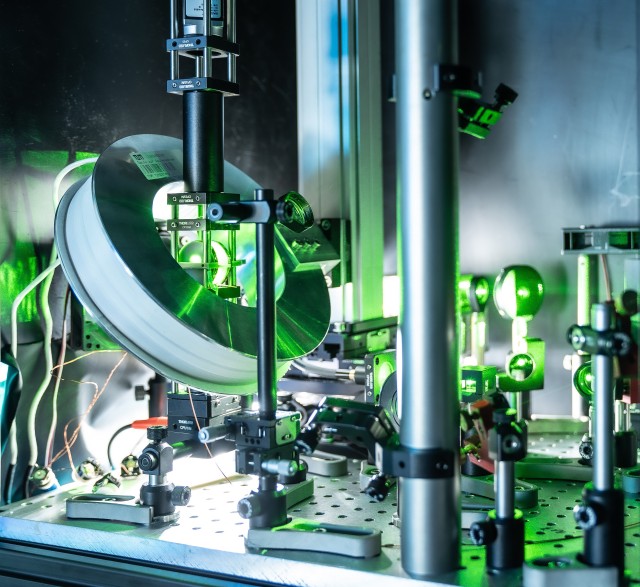
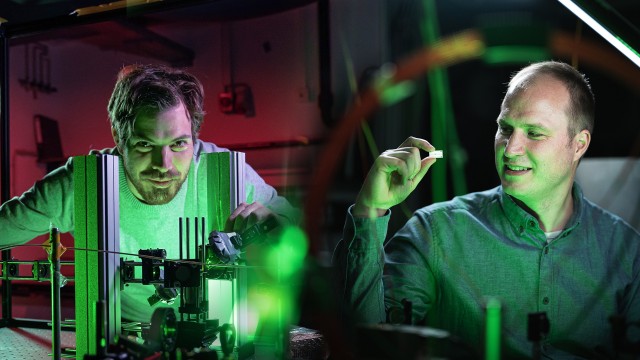
A physicist and a chemist, who probably wouldn’t have met if it weren’t for MCQST, are currently developing a new kind of quantum camera. Andreas Stier and Dominik Bucher intend to use it primarily to study ultra-thin 2D materials.
Selected success stories
 © Caltech
 Developing novel experimental techniques
Project by Nelson Darkwah Oppong (LMU)
The seed funding enabled the development of novel experimental techniques, where optical lattices and local state-dependent control with optical tweezer are combined in order to realize novel quantum computing schemes with cold neutral Yb atoms.
Nelson is currently a Visiting Associate at Caltech.
Combining inter-disciplinary expertise
Project by Noelia Fernandez (WMI)
The collaboration with Prof. Efetov's group at LMU, was highly valuable for combining expertise on fabrication know-how and ideas from different perspectives: one oriented to the fundamental research aspects of quantum materials and the other aiming at their applications in superconducting device technologies.
Noelia is currently Product Application Scientist at kiutra.
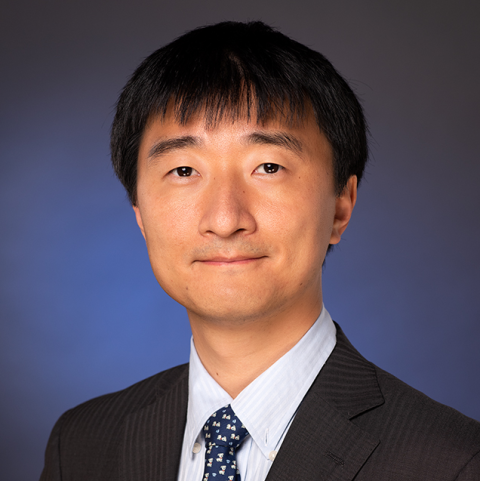
Exploring new directions
Project by Akira Ozawa (MPQ)
Major achievements from this project are:
1. Development of a micro-chip Yb:KYW laser oscillating at 981nm for the first time.
2. We found that the thermal lens can be astigmatic and asymmetric due to non-isotropic surface bulging. This effect was not known before.
3. Evaluation of phase/amplitude noise of Yb:KYW comb for XUV frequency comb generation.
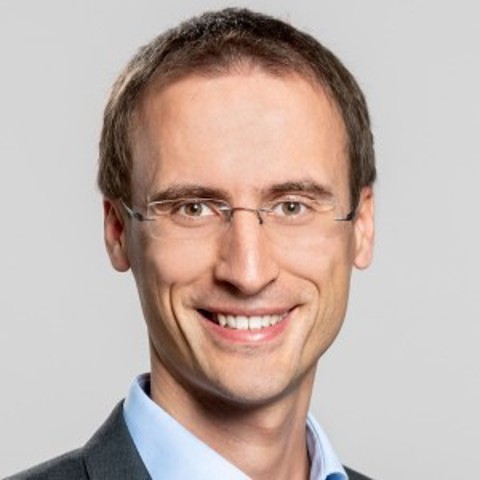
Shaping the group's profile
Project by Andreas Reiserer (TUM)
The results from the project shaped the main research direction (quantum networks) of Andreas’ group. Moreover, the project enabled a successful major grant application (BMBF) targeting portable quantum network nodes based on erbium-doped silicon.
 © C. Hohmann / MCQST
 Establishing long-term collaboration
Project by Amanda Young (TUM)
The project has helped solidify Amanda's research relationship with her collaborator Angelo Lucia. The two scientists have already planned future projects.It is a collaboration that Amanda expects to continue for years to come.
Amanda is currently Asst. Prof. at University of Illinois Urbana-Champaign
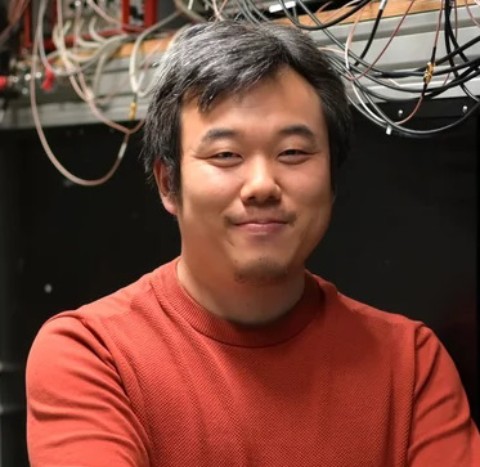
Scientific breakthrough
Project by Xinyu Luo (MPQ)
Facilitated by the flexible funding, the group was able to produce the so-far coldest Fermi gas of polar molecules thus far. The groundbreaking results were published in Nature and featured on the magazine’s cover.
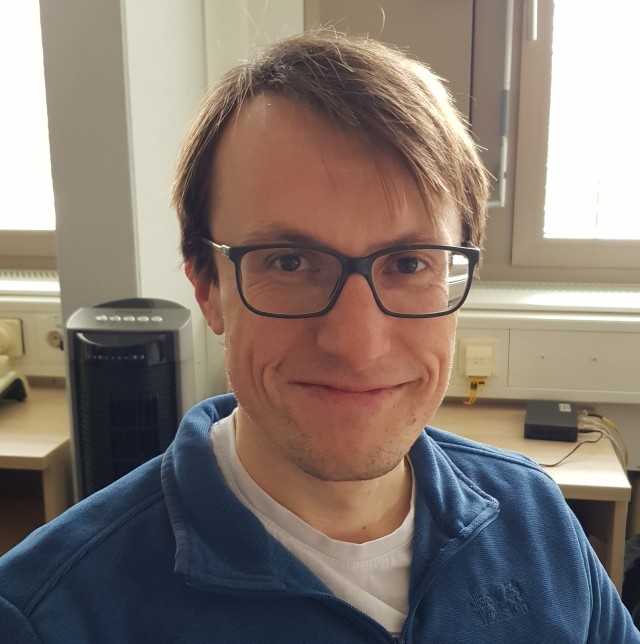
Kick-starting a new laboratory
Project by Kirill Fedorov (WMI)
The seed funding project has provided Kirill with an essential experimental and theoretical basis for the follow-up project on “Quantum Microwave Tokens & Memories” (QuaMToMe) funded by BMBF with a total budget of 1.9 M€.
Encouraging innovative ideas
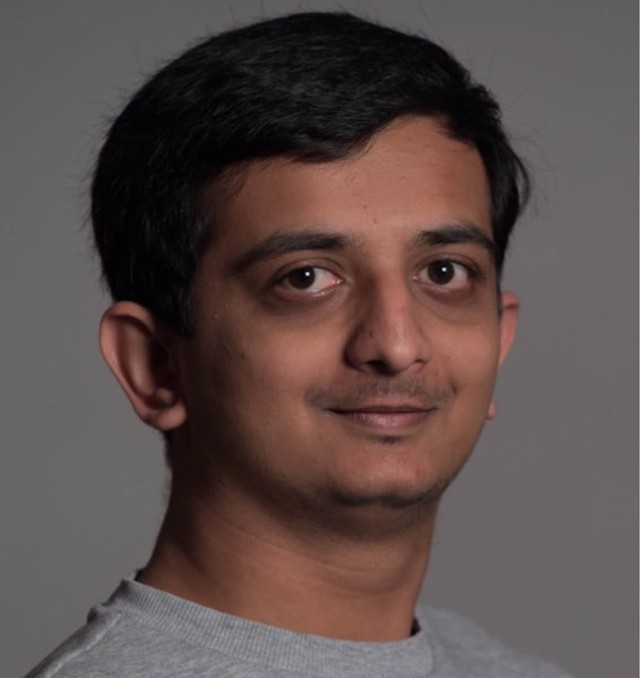
Project by Samarth Vadia (LMU)
A follow-up project was recently awarded additional funding by SPRIND (Federal Agency for Disruptive Innovation in Germany). This agency supports radical new ideas and technologies in Germany. The group became the first successful SPRIND awardees at LMU.
Exploring new directions
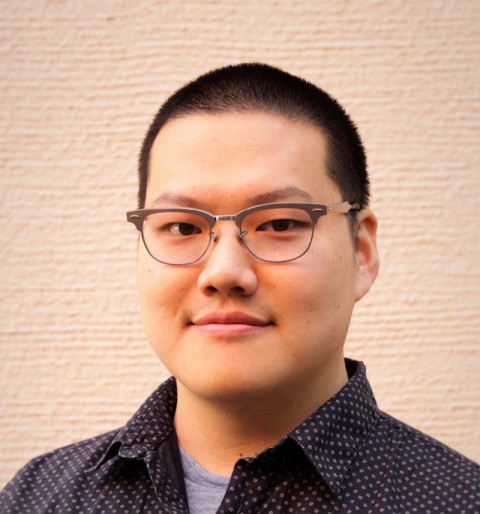
Project by Martin Lee (LMU)
The funding enabled the exploration of a new research direction focused on mechanical tuning of electronic properties in twisted 2D systems. Now, the group is close to harnessing both the in-plane and out-of-plane strain as tuning parameters.