MCQST in the Quantum Year 2025 – A retrospective
19 December 2025
Celebrating Quantum Science and Technology
UNESCO declared 2025 the International Year of Quantum Science and Technology, recognizing the profound impact quantum research has had over the past century—and continues to have on science, technology, and society. At the Munich Center for Quantum Science and Technology (MCQST), we marked this year by celebrating 100 years of quantum history and the vibrant, forward-looking research community shaping its future.
Throughout the year, MCQST organized and contributed to a wide range of outreach activities, scientific events, and collaborative initiatives, engaging audiences from students to international experts. Here is an overview of some of the initiatives.
Quantum Year Kick-off at the Deutsches Museum
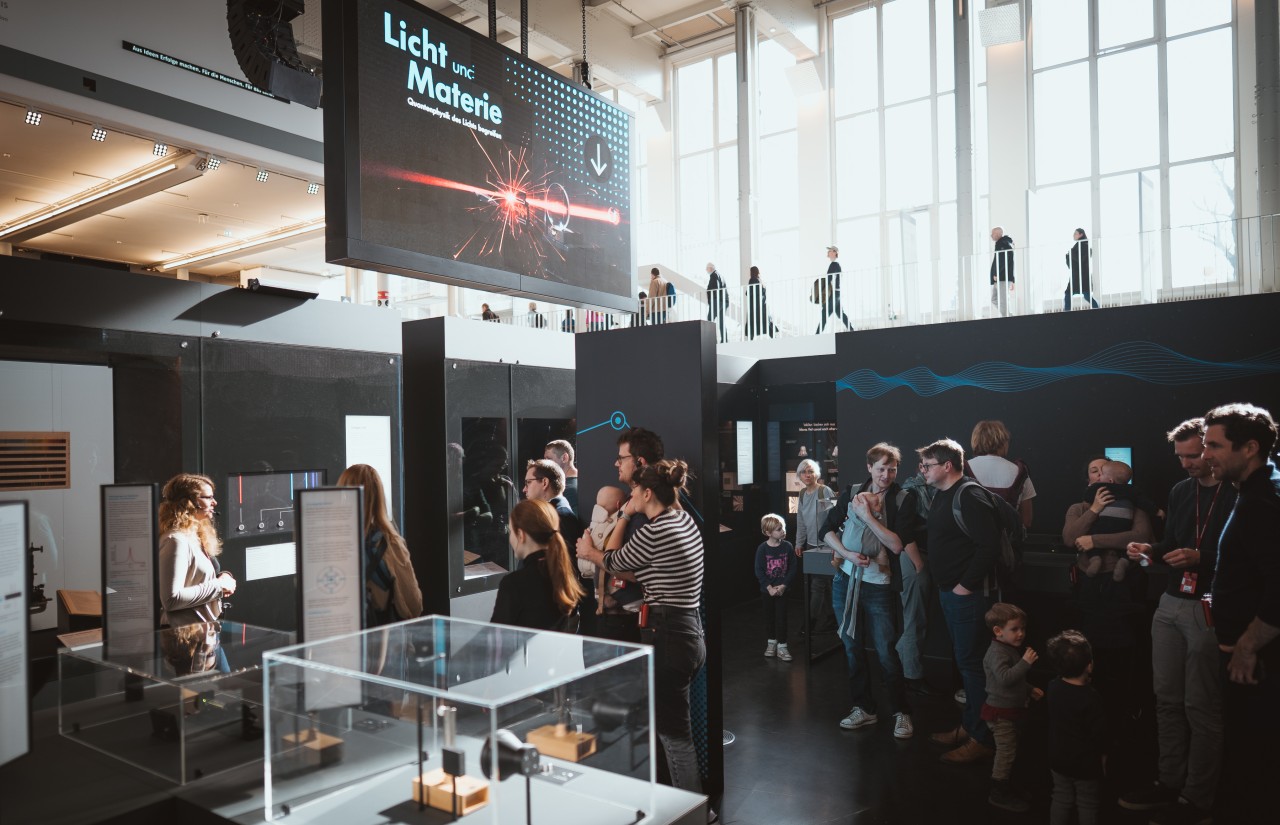
We kicked off the Quantum Year in February with a Quantenwochende at the Deutsches Museum, featuring the jointly developed exhibition "Light and Matter". Visitors explored quantum phenomena through hands-on exhibits and interactions with our researchers. Questions submitted via Quantenpost were answered on stage, providing personal insights into the daily lives and motivations of quantum scientists. Videos are now available on MCQST’s YouTube channel.
In collaboration with LMU’s Faculty of Physics, MCQST contributed to the "Physik Modern" lecture series, with a series of public talks offering insights into the history and modern developments of quantum physics. The monthly lectures were well attended and recorded for the YouTube channel "Urknall, Weltall, und das Leben".
April brought the ICFO-IMPRS-MCQST School to Munich, hosting researchers from Spain for three days of scientific exchange and networking. You can read about the workshop on our blog.
In May, the quantum research communities of Munich and Singapore were brought into superposition at a dedicated workshop at Singapore’s Centre for Quantum Technologies (CQT) to further international and interdisciplinary collaboration. You can read on CQT's website about it.
May 2025 also brought excellent news for the future of MCQST: the cluster successfully secured continued funding from the German Research Foundation (DFG). This support enables MCQST to pursue essential research across all areas of quantum science and technology, with a strong emphasis on supporting early-career researchers.
Strengthening the Quantum Community
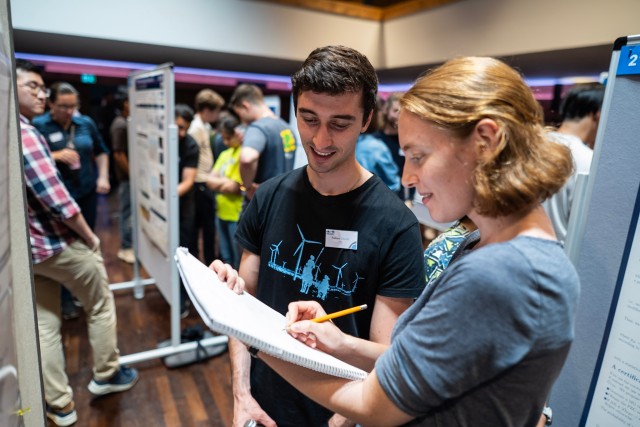
At World of Quantum, we were thrilled to witness the rapid growth of the quantum industry over the past two years. Engaging with stakeholders from research, startups, and industry underscored the momentum and excitement driving the field forward.
Inspiring the Next Generation
MCQST focused on inspiring young people throughout the year. In July, the inaugural Girls for Science event encouraged high school girls to explore careers in quantum science, based on a successful format from the Perimeter Institute. PhotonLab, MCQST’s high school lab, moved into a larger space, enabling more students to participate in hands-on experiments.
The MCQST Distinguished Lecturer Award was presented to Prof. Markus Aspelmeyer, who delivered three talks to varied audiences, including a public lecture at the Deutsches Museum.
MCQST also co-organized the Bavarian Quantum Day with Munich Quantum Valley, Heisenberg Gesellschaft, and the Bavarian Ministry of Science and the Arts, welcoming around 200 high school students to explore quantum science from fundamentals to applications. The Viva Quantum Symposium, hosted at the Deutsches Museum, brought together the international quantum community for scientific exchange in a lively and interdisciplinary setting. Taking place during the final week of the “Light and Matter” exhibition, the symposium emphasized the global nature of quantum research. Although the exhibition has since closed, it remains accessible virtually and will be incorporated into the museum’s permanent collection in 2028.
Quantum Physics for Everyone
In November, a dedicated Quantum Day at LMU’s historic main building welcomed children, school classes, families, and the general public. With interactive formats, hands-on activities, and inspiring talks, the event drew over 1,500 visitors, making quantum physics a colorful and accessible experience. To further highlight the Year of Quantum, historic figures connected to LMU were featured through dedicated window displays in the foyer of the Faculty of Physics.
 © MCQST / C. Hohmann
 The end of the year also brought on its own highlights. A joint workshop with QuanTIP in Paris allowed us to foster collaboration and dialogue across borders.
At the intersection of science and culture, MCQST partnered with the ERES Stiftung on an exhibition combining art and quantum science entitled "Seeing the Unseen - Quantum Physics and Art as Entangled Worlds". Launched in December 2025 and running until September 2026, the exhibition features thought-provoking works alongside a rich scientific accompanying program.
Finally, MCQST launched an interactive version of the “Little Quantum Pocket Guide”, which was originally developed in collaboration with Prof. Steffen Glaser and Dr. Dennis Huber. The guide offers visually intuitive and scientifically accurate explanations of core quantum concepts such as superposition and entanglement, available both as a booklet and as an interactive app.
We look back with gratitude on a full, engaging, and inspiring Quantum Year 2025!
Related content
- Curious about Research Highlights? We invite you to explore our news section for more insights into MCQST’s research and activities—and to continue discovering the fascinating world of quantum science with us.
- Browse through all our Events in Quantum Year 2025
- Gain impressions of our events in the media gallery.