Strengthening Experimental Exchange: The MCQST PhD Winter Workshop 2025
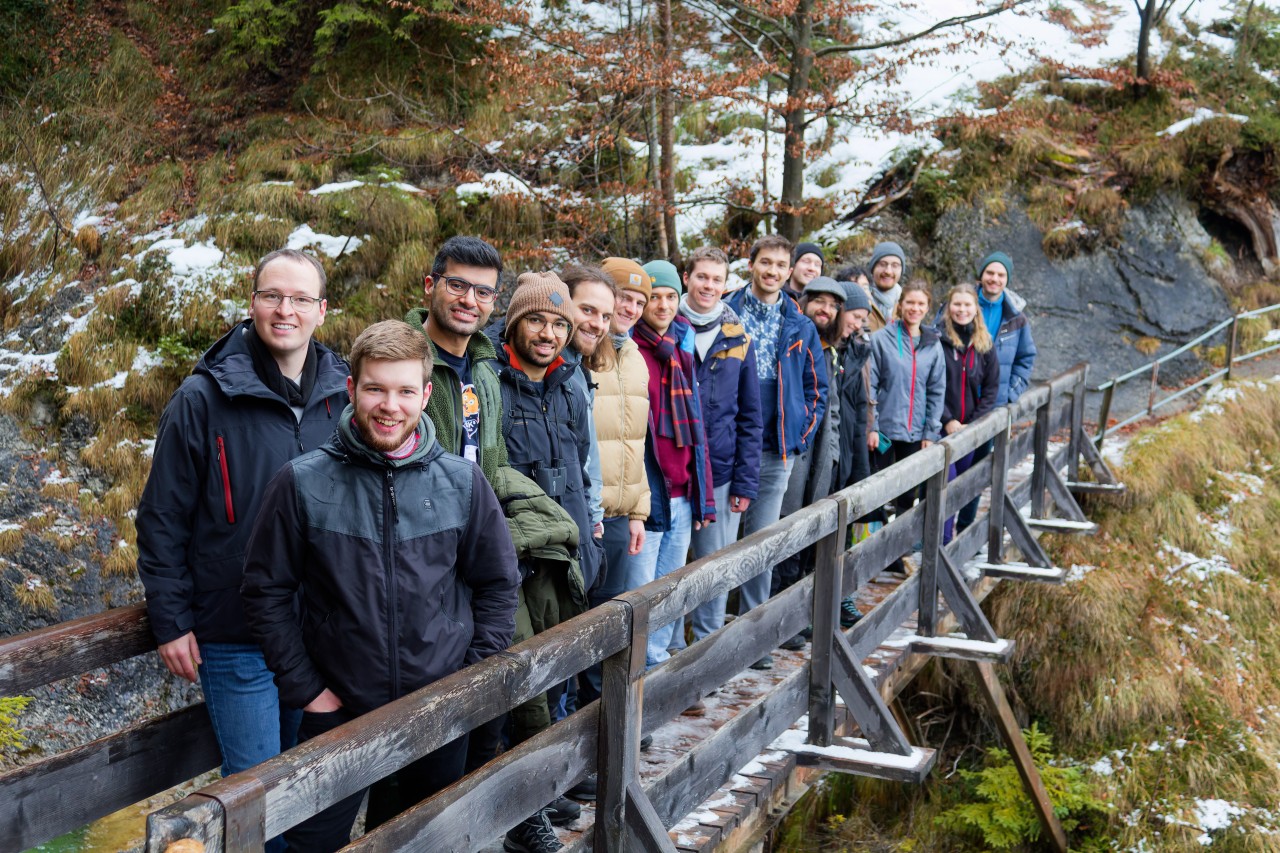
From December 4–6, 2025, the MCQST PhD Winter Workshop ‘Three Days, Two Dimensions, Single Photons’ for experimental doctoral researchers was taking place in Bayrischzell. The workshop was initiated and organized by Julien Chenede, Tjorben Matthes, Lukas Schleicher and Johannes Schmuck. It brought together 23 MCQST PhD students working on experimental aspects of light–matter interactions. This post outlines the motivation behind the workshop, its structure, and the key takeaways from the experience.
Why did we want to organize this workshop in the first place?
The initial motivation was simple: although experimental research within MCQST is diverse, PhD students in the labs often face similar challenges. Whether it is in the cleanroom with nanofabrication, experimental optical techniques, data handling, or simply figuring out how others solved a similar administrative problem, many of us are dealing with comparable issues.
We felt there was a gap for a setting where experimental PhD students could openly exchange experiences without the pressure of presenting polished results or discussing physics in detail. Instead of covering all MCQST research directions, we decided to focus on experimental work related to light–matter interaction in general, allowing discussions to go deeper and feel more relevant for everyone involved.
What did we want participants to take away from the workshop?
Our main goal was to create a space for real exchange of experimental techniques and challenges. Scientifically, we hope participants have picked up practical ideas, tools, and approaches they could directly take back to their labs. On a more personal level, we wanted to build a sense of community and expand everyone’s network within MCQST. Ideally, participants would leave the workshop knowing who to contact and where to ask for help. They also realized that many challenges are shared across groups and felt more confident reaching out beyond their immediate collaborations.
 © Tjorben Matthes
 "Our main goal was to create a space for real exchange of experimental techniques and challenges. Scientifically, we hope participants have picked up practical ideas, tools, and approaches they could directly take back to their labs. On a more personal level, we wanted to build a sense of community and expand everyone’s network within MCQST."
How did we design the format to support this idea?
When planning the workshop, we deliberately avoided a tight schedule or a talk-heavy program. Instead, we focused on leaving enough time for discussion. We combined short pitch talks with longer scientific presentations, allowing speakers to highlight a specific problem or dive into technical details. An interactive session on presentation skills served as an icebreaker and helped foster interaction among participants.
Several sessions were explicitly discussion-oriented, with ideas being collected and reflected on together. To break up the routine, we also included an outdoor walk-and-talk session. Changing the surroundings turned out to be a great way to stimulate new conversations and make discussions feel more informal. Having designated chairs for each session helped guide the discussions and ensured that they remained productive.
How did the scientific topics reflect everyday PhD life in the lab?
Although the experimental approaches across MCQST are very different, many of the challenges discussed during the workshop were similar or known by others. Topics ranged from device fabrication and cleanroom workflows to software tools, data storage, and documentation practices.
Sharing experiences across labs made it clear that a lot of knowledge already exists within the community. It is just often not easily accessible. One recurring idea was therefore to continue these exchanges in a more regular format, for example through a renewed seminar series focused on specific experimental topics, combined with expert input.
What was the atmosphere like during the workshop?
 © Tjorben Matthes
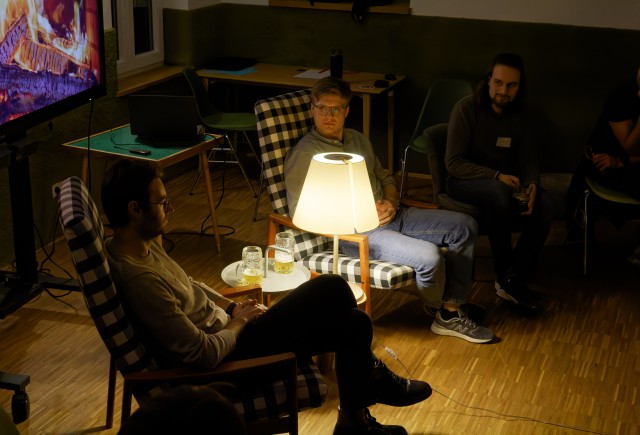
 A particular highlight was the fireside chat with the speakers Timo Sommer (phanofi) and Thomas Luschmann (Peak Quantum). In a very informal setting, they shared insights into the quantum start-up world, discussed their own career paths, and gave honest perspectives on life outside academia. This session sparked many questions and was a great way to round off the second day.
What did we take away, and what comes next?
For us as organizers, the workshop clearly showed how valuable such focused, PhD-driven events are. Many follow-up ideas emerged directly from the discussions, including lab and fabrication sessions offered by participants and the plan to set up a shared platform where experimental and fabrication knowledge can be collected and accessed by the wider community.
We also see the workshop as a starting point for future activities of the MCQST PhD board, rather than a one-off event. There is strong interest in continuing this format within a regular seminar series and expanding it by involving researchers from more groups within the MCQST. Looking back, parallel sessions and extra follow-up discussion sessions would be something we would consider for future editions.
Overall, the experience reinforced the idea that creating the right environment for exchange can make a real difference in how we work more efficiently and successfully and collaborate as PhD students.
Ideas, feedback, and interest in future activities are welcome and can be directed to the MCQST PhD Board (phd-board[at]mcqst.de), which serves as the central point of contact for further information.
Author:
Johannes Schmuck
Doctoral Candidate, Walter Schottky Institute
Chair of Nanotechnology and Nanomaterials
Head of Group: Prof. Dr. Alexander Holleitner