MCQST Colloquium: Maria Chekhova
10 February 2026
from 14:00
to 16:00
MCQST Colloquium | Maria Chekhova (Max Planck Institute for the Science of Light, Erlangen)
Address / Location
MPI of Quantum Optics | Herbert Walther Lecture Hall
Hans-Kopferman-Straße 1
85748
Garching
Show Map
Hide Map
The MCQST Colloquium Series features interdisciplinary talks given by visiting international speakers. The monthly colloquium covers topics spanning all MCQST research units and will be broadcast live via Zoom for audiences worldwide. The main goal of the series is to create the framework for idea exchange, to strengthen links with QST leading groups worldwide, as well as to act as an integral part of the local educational environment.
MCQST Colloquium: Maria Chekhova
We are excited to invite you to the colloquium talk by Maria Chekhova (Max Planck Institute for the Science of Light, Erlangen).
Agenda
14:00 | Teaser talk by Tobias Frank on "Connecting Neutral-Atom Quantum Nodes across a metropolitan fibre link"
14:15 | Coffee break
14:30 | Colloquium talk by Maria Chekhova on “‘Flat-optics’ generation of entangled photons”
‘Flat-optics’ generation of entangled photons
A promising tendency in quantum optics is its implementation on ‘flat’ platforms: ultrathin layers, nanoresonators, and metasurfaces. Their advantages are: broad bandwidth and ultrashort times of operation, multifunctionality, the possibility to use a variety of materials, and field enhancement due to the geometric resonances. ‘Flat’ geometry offers a plethora of methods for entanglement engineering.
In particular, ‘flat’ platforms can be used to generate entangled photons through spontaneous parametric down-conversion (SPDC). SPDC needs materials with high second-order nonlinearity, whose use as bulk crystals is sometimes restricted by phase matching condition. In ultrathin layers, phase matching is satisfied automatically, and SPDC enables generation of entangled photons with record bandwidths and giant degrees of entanglement, as well as tuneable polarization entanglement. Metasurfaces, in addition, boost the generation of entangled photons at resonance frequencies, due to the enhancement of the vacuum field seeding the SPDC. They also enable engineering of the polarization and directivity of two-photon emission.
In ultrathin sources, SPDC can be also tuned with external factors such as electric field or temperature. In this connection, very promising are experiments where entangled photons are generated in a nematic ferroelectric liquid crystal. While the efficiency of pair emission is almost as high as in a strongly nonlinear crystals of the same thickness, it can be switched on and off by applying a few V of electric field. Another way to tune both the rate of pairs and their polarization state is to apply the twist of the liquid crystal molecules.
About Maria Chekhova
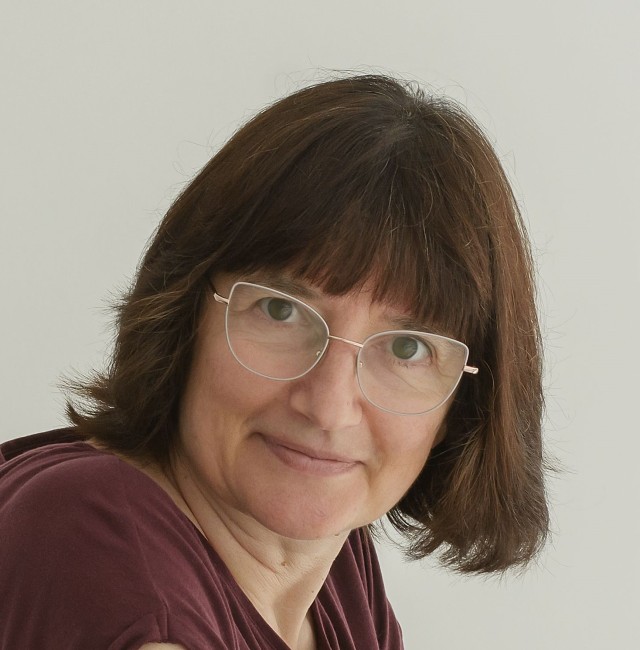
Maria Chekhova obtained her PhD at the Lomonosov University (Moscow, Russia) in 1989, then the habilitation degree in 2004, and worked there until 2009 as a researcher and a group leader. Since 2009 she leads an independent research group at Max-Planck Institute for the Science of Light (Erlangen, Germany). Her research area is generation and application of nonclassical light, with a special focus on extreme cases: bright states of light manifesting quantum behavior on the one hand and nanoscale sources of quantum light on the other hand. She is a fellow of Optica and a recipient of several awards including the ERC advanced grant.
Join in-person or via Zoom
https://lmu-munich.zoom.us/j/69761439704
Meeting ID: 697 6143 9704, Passcode: mcqst2526