MCQST Colloquium: X-mas edition with Andreas Gritsch & Sanjay Moudgalya
9 December 2025
from 14:30
to 16:00
MCQST Colloquium | X-mas edition with Andreas Gritsch (TUM) & Sanjay Moudgalya (TUM)
Address / Location
MPI of Quantum Optics | Herbert Walther Lecture Hall
Hans-Kopferman-Straße 1
85748
Garching
Show Map
Hide Map
The MCQST Colloquium Series features interdisciplinary talks given by visiting international speakers. The monthly colloquium covers topics spanning all MCQST research units and will be broadcast live via Zoom for audiences worldwide. The main goal of the series is to create the framework for idea exchange, to strengthen links with QST leading groups worldwide, as well as to act as an integral part of the local educational environment.
MCQST Colloquium: X-mas edition with MCQST members Andreas Gritsch and Sanjay Moudgalya
We are excited to invite you to the colloquium talks by Andreas Gritsch (TUM) and Sanjay Moudgalya (TUM).
Agenda
14:30 | Colloquium talk by Andreas Gritsch (TUM) on "Towards distributed quantum information processing using nanophotonic silicon chips"
15:00 | Colloquium talk by Sanjay Moudgalya (TUM) on “Parent Hamiltonians for Quantum Many-Body Scars”
15:30 | Get-together and exchange with coffee, plätzchen & glühwein
Towards distributed quantum information processing using nanophotonic silicon chips | Andreas Gritsch (TUM)
Optically addressable spin qubits in host materials that are compatible with wafer-scale manufacturing offer unique promise for quantum networking [1,2]. In this context, we study emitters that can be integrated with silicon nanophotonics. Specifically, we use erbium dopants, which provide an optical transition in the telecommunications C-band and thus eliminate the need for quantum frequency conversion for long-distance quantum network links [3,4]. By choosing dedicated annealing conditions, we found two different lattice sites in the silicon host matrix that exhibit favorable properties for quantum technologies [5] and that are compatible with foundry-fabricated nanophotonic structures [6]. Single erbium dopants have then been resolved by spectral multiplexing once these emitters are embedded in efficient nanophotonic spin-photon interfaces formed by resonators with high quality-factors and small mode volumes. Using such a device, we furthermore demonstrated spin initialization and optical single-shot readout of a spin qubit in silicon with a fidelity of 87% [7]. In addition, we showed that the electronic spin state can be coherently rotated and found a spin coherence time of 48 𝜇s at temperatures of about 2 K. Now, we focus on the optical coherence of these emitters by using photon echo techniques and find coherence times of few hundreds of nanoseconds and good indistinguishability of the emitted photons on short timescales.
References:
[1] S. Simmons, Scalable Fault-Tolerant Quantum Technologies with Silicon Color Centers, PRX Quantum 5, 010102 (2024).
[2] A. González-Tudela, A. Reiserer, J. J. García-Ripoll, and F. J. García-Vidal, Light–matter interactions in quantum nanophotonic devices, Nat. Rev. Phys. 1 (2024).
[3] A. Reiserer, Colloquium: Cavity-enhanced quantum network nodes, Rev. Mod. Phys. 94, 041003 (2022).
[4] A. Ulanowski, B. Merkel, and A. Reiserer, Spectral multiplexing of telecom emitters with stable transition frequency, Sci. Adv. 8, eabo4538 (2022).
[5] A. Gritsch, L. Weiss, J. Früh, S. Rinner, and A. Reiserer, Narrow Optical Transitions in Erbium-Implanted Silicon Waveguides, Phys. Rev. X 12, 041009 (2022).
[6] S. Rinner, F. Burger, A. Gritsch, J. Schmitt, and A. Reiserer, Erbium emitters in commercially fabricated nanophotonic silicon waveguides, Nanophotonics (2023).
[7] A. Gritsch, A. Ulanowski, J. Pforr, and A. Reiserer, Optical single-shot readout of spin qubits in silicon, Nat. Commun. 16, 64 (2025).
[8] S. Ourari et al., Indistinguishable telecom band photons from a single Er ion in the solid state, Nature 620, 7976 (2023).
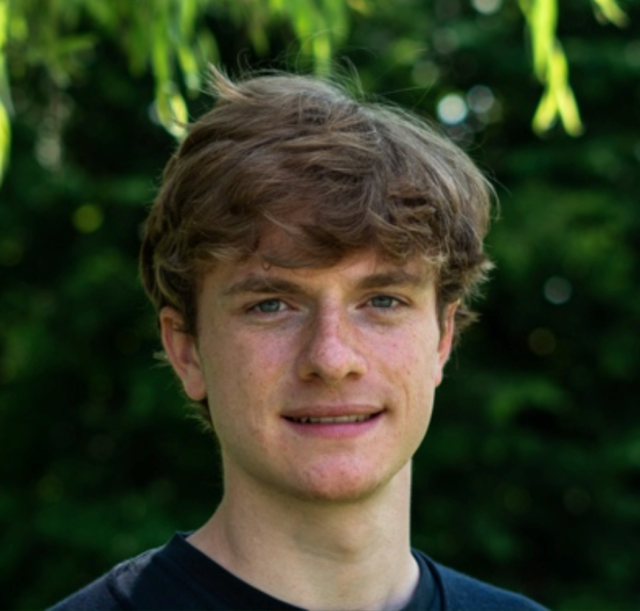
About Andreas Gritsch
Parent Hamiltonians for Quantum Many-Body Scars | Sanjay Moudgalya (TUM)
Quantum many-body scars (QMBS) provide a paradigmatic example of “weak ergodicity breaking”, in which certain simple quantum states evade the otherwise ubiquitous process of thermalization in interacting many-body systems. Thermalization is expected on the basis of the Eigenstate Thermalization Hypothesis (ETH)—a widely studied conjecture about the structure of many-body eigenstates that has been numerically verified in numerous physical models. QMBS, by contrast, consist of atypical eigenstates that violate ETH and thereby enable nonthermal dynamics. Over the last several years, QMBS have been observed in a variety of experiments, and many analytic constructions of Hamiltonians hosting scars are now known. This growing landscape raises a natural question: What do all these Hamiltonians have in common? In other words, can we classify the “parent Hamiltonians’’ that give rise to a particular type of QMBS? In this holiday-season talk, I’ll give a gentle tour through recent progress on this question. We will see that parent Hamiltonians for scars come in many varieties—some echoing the familiar structures of parent Hamiltonians studied in the context of matrix product states (MPS). This understanding also uncovers constraints on what kinds of QMBS can exist when we insist on locality in the Hamiltonian, and it leads to a more refined perspective on what defines a QMBS and how it violates the ETH. I will conclude by outlining several open questions that continue to puzzle us regarding the structure of QMBS, particularly those appearing in the celebrated and experimentally relevant PXP model.
About Sanjay Mougdala

Join in-person or via Zoom
https://lmu-munich.zoom.us/j/69761439704
Meeting ID: 697 6143 9704, Passcode: mcqst2526