Research Area 3: Quantum Networks
In a future quantum network, many spatially separated quantum systems will be interconnected by photonic channels, which enable the exchange of quantum states and the generation of remote entanglement. The realization of such quantum networks will facilitate novel fundamental and precision tests of quantum theory and the quantum-to-classical transition in distributed quantum many-body systems.
Besides being of fundamental interest, however, quantum networks offer unique potential for applications. They can be used to simulate complex quantum systems and to ensure unbreakable encryption over global distances. Even more important, distributed quantum information processing with a modular architecture exhibits a unique potential for up-scaling to fundamentally enhance computational power. Finally, using the techniques of quantum measurement in a network of distributed quantum sensors can lead to an increased precision in various settings, ranging from space telescopes to optical atomic clocks. In addition to the plethora of known applications, novel possibilities of unforeseeable impact will likely emerge once a fully-fledged quantum network becomes available. This puts the realization of large-scale quantum networks at the forefront of today’s quantum science.
The ultimate goal of the Research Area "Quantum Networks" within MCQST is the development of a quantum internet—a global network that enables the secure transmission of quantum information between different quantum devices and across arbitrary distances.
Implementing this vision requires several key components, including efficient light–matter interfaces at the single-quantum level, microwave-to-optical quantum transducers, and quantum repeaters to overcome photon losses and preserve quantum properties over large distances. Once realized, small- and large-scale quantum networks may revolutionize the way we communicate and process information by leveraging the unique features of quantum mechanics. Therefore, within MCQST, several experimental and theoretical approaches are being explored to realize and operate such networks.
RA-3 Coordinators

RA-3 Members
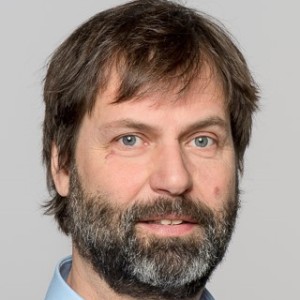


Jonathan Finley
Semiconductor Nanostructures and Quantum Systems
RU-E Co-coordinator
Research Website