Research Area 6: Emerging Directions
In the Research Area (RA) Emerging Directions, we explore interdisciplinary connections between quantum science and technology and other research areas. We want to develop Quantum Science and Technology (QST) tools to explore the widest range of scientific problems, from fundamental physics and quantum chemistry to biological and medical physics.
In the future, QST will become part of the toolbox to investigate very diverse scientific fields, and areas beyond the traditional QST research will become very relevant. We aim to develop new ideas and methods and to build bridges between the QST advances and other research fields, including precision tests and medical applications, artificial intelligence, high-energy physics, and quantum chemistry. At the same time, investigating new methods for quantum science education will be crucial to train a new generation of professionals with heterogeneous background.
The directions explored in RA-6 include the enhancement of well-established technologies thanks to QST advances, as well as brand-new directions.
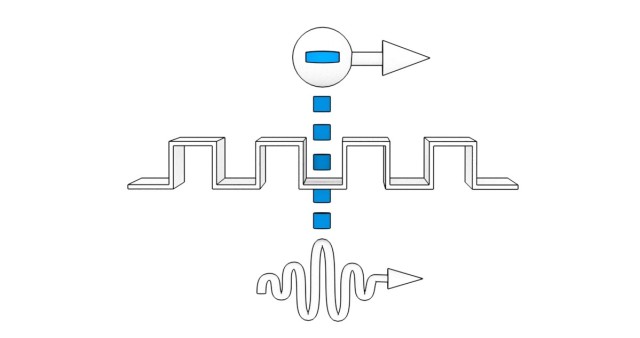
- Well-established quantum technologies such as electron microscopy and positron-emission-tomography (PET) imaging could boost their potential exploiting quantum entanglement.
- Artificial intelligence, revealed as disruptive, has the potential to enhance QST. A longer-term goal is quantum-based AI, for which conceptual foundations and possible implementations need to be investigated.
- For fundamental physics, connections with quantum technologies are being explored, including proposals for quantum and quantum-inspired simulations of lattice gauge theories, for which building-blocks have been already demonstrated, as well as the link between entanglement and the structure of space-time geometry.
- In quantum chemistry, new insights about the role of entanglement in the structure of wavefunctions leads to entirely new classical algorithms, and promising platforms for quantum simulation are being proposed.
- As a new direction, we are also developing modern QST curricula and suitable didactical approaches that exploit AI and individualized teaching.
RA-6 Coordinators

Mari Carmen Bañuls
Tensor Networks and Quantum Many-Body Systems
Equal Opportunity Manager
RU-B Co-coordinator


RA-6 Members








Jad C. Halimeh
LMU Professor of Theoretical Physics & Max Planck Research Group Leader
Research Website