Research Area 1: Quantum Information
Quantum information (QI) aims to set the course for the transition from the information age to a quantum information age. It refers to properties and applications of quantum systems that are largely independent of their physical carriers. QI is intimately related to foundational aspects of quantum computing (QC).The advancement of fundamental concepts and tools in quantum information and quantum computing is a multidisciplinary endeavor. A broad spectrum of research directions is covered by this area: the development of theoretical and mathematical methods for the classification and effective description of quantum states and information processing tasks, new protocols and algorithms for quantum devices, resource-oriented analysis and implementations, as well as validation and benchmarking methods. Theoretical methods underpin the experimental side of QI, which develops the building blocks for quantum information processing and quantum computing.
The main goal of Research Area 1 (RA-1) is to establish new ways of understanding and generating multipartite entangled quantum systems and to identify their applications. Focus areas include:
- Entanglement and complexity properties of multipartite quantum systems
- Quantum information with limited resources
- Creation and application of multipartite quantum resources
- Quantum channels
The understanding of multipartite entangled systems will be explored both from a theoretical and experimental perspective. We will advance the implementation of quantum resource states on different platforms, ranging from optical traps to superconducting systems. Next-generation quantum gates will help to process and also transfer QI between different platforms. Theory will be crucial in guiding experimental advances by developing algorithms and schemes for quantum information with limited resources. The research in RA-1 will strengthen links between quantum information science and quantum many-body physics.
RA-1 Coordinators
RA-1 Members



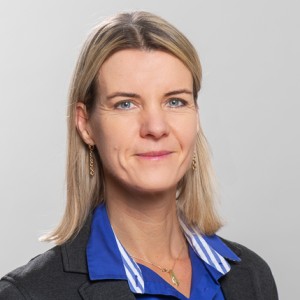
Barbara Kraus
Quantum Computing, Verification of Quantum Device
MCQST Speaker
Equal Opportunity Manager
RA-2 Co-coordinator